
When Your Skin Suddenly Stings and Reddens: Stopping New Products, and the Signs That Need a Doctor
If your skin suddenly stings and turns red, stop the product you suspect. Note what changed recently, and check which signs need a doctor or emergency care.

Skincare Editorial
When your skin suddenly stings and turns red
Stop using anything new, and start with the symptoms and what changed recently in your routine.

When skin suddenly stings, reddens, or itches, people often say it has “flared up”, but that phrase alone does not separate dryness from irritation, allergy, or infection. Note what you have used recently, how far the symptoms reach, and when they began.
Stop first with anything you started recently, or anything that felt uncomfortable right after use. Before looking for something to apply to help, watch whether the symptoms worsen or spread. Cleansing gently and easing friction can help, but cosmetics alone rarely settle the cause.


Avène
Cleanance Cleansing Gel
400 ml · 1 unit
Check your skin's condition before adding a new product when it feels uncomfortable. This is an example for comparing cleansers.
View on NaverWhat should you look at before you change toner?
Stinging is not a reason to apply a different toner right away. Toner is not a required step, and adding a new product while the cause stays unclear makes later reactions harder to tell apart.
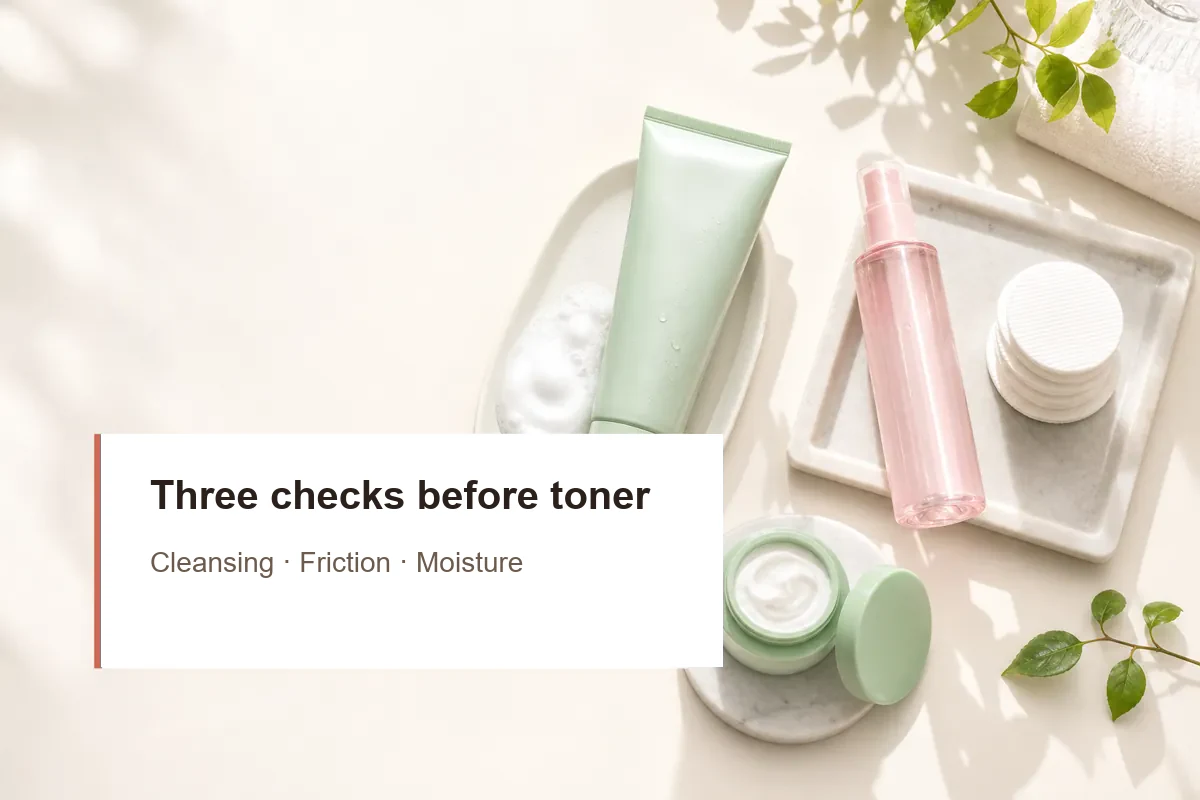
If your cleansing step has already left you feeling very dry, for instance, any toner that follows can feel like it stings. And if you wipe with a cotton pad every day, the friction can matter more than the product does.
Editor’s Point
Rather than trying one new product after another, write down what changed recently in your products and how you use them. Stop anything that coincided with a symptom, and if the discomfort does not settle, have it checked at a dermatology clinic.
When your skin feels uncomfortable, look at the reaction you have before looking for a new product. Glowmeo Editorial
What are the four things to check before the toner?
The items below are for looking at where you can ease irritation in your usual routine. Severe swelling, blisters, weeping, pain, or a rash that spreads quickly needs medical care. If breathing becomes difficult, or your lips, tongue, or throat swell, get emergency help.
Tightness after cleansing
If your face tightens quickly with nothing applied, look at your cleansing step before the toner. “Feeling squeaky clean” may matter less than “feeling comfortable after washing”.
Whether wiping suits you right now
Rubbing repeatedly with a cotton pad can be a real burden. But do not test a product that already stings or has reddened your skin by switching to applying it by hand. Stop that product first.
Whether you are applying too much
Changing or layering several products at once makes it hard to tell what felt uncomfortable. On a sensitive day, keep only your basic steps and take it from there.
Whether you exfoliate often
If it already stings or looks red, stop scrubs, peeling pads, and acid products. Do not keep using them at a lower frequency, and once your symptoms have settled, check the product labelling and your clinic’s guidance before using them again.


What is a basic routine for a sensitive day?

Cleanse gently
On a day you wore makeup, remove it thoroughly but only as much as you need, and in the morning keep things light depending on how your skin feels. When you use a towel, pressing the water off is less of a burden than rubbing.
Skipping toner is fine
Even when your skin feels comfortable, follow the method and amount the product allows. Toner is not required, and if it stings or reddens during use, stop rather than changing how you apply it.
Keep only the moisturiser you feel comfortable with
If the moisturiser you normally get on with feels comfortable, you can use it as directed. Stop if it stings as you apply it, or if the reaction spreads. Do not try to settle a current symptom with a new cream bought in a hurry.
Reduce sun exposure too
Outdoors, use shade, clothing, and a hat to reduce sun exposure. If sunscreen feels uncomfortable to apply, do not force yourself to keep using it; ask about an approach that suits your skin at your appointment. Until your skin feels comfortable again, you can put off testing whether your makeup pills.


Avène
Cleanance Aqua Cream-in-Gel
50 ml
Check the amount of gel to use and whether your skin feels tight afterwards.
View on NaverWhat should you check when you are able to choose a new product?
The table below is not a list of products to add to skin that has symptoms. Use it when you are reviewing your routine again after your skin has settled. Whether to try a suspected product again is better discussed at a dermatology clinic.
| Type | When to look at it first | Step | What to check |
|---|---|---|---|
| Cleanser | When tightness comes on strongly right after washing | Cleansing step | Squeaky feel, fragrance, tightness after washing |
| Toner | When your skin feels comfortable and the purpose is clear | Optional step | What it does, how to use it, ingredients you have reacted to |
| Moisturiser | When you need moisture after your skin has settled | Moisturising step | Weight, pilling, how it feels through the day |
Buying something new can wait. First, keep a note of the name and ingredient list of whatever you stopped using. When you do look for a replacement, don’t choose by the same brand or a “soothing” label alone, check it against your earlier reaction and the directions.
What to check at the cleansing step
If tightness comes on quickly after washing, look first at how comfortable your skin feels afterwards rather than at how squeaky it feels.
What to check with a soothing toner
If a toner stings during use, stop first. Don’t switch to a format you apply by hand and keep testing it in the same state.
What to check when you finish moisturising
If your usual moisturiser stings too, stop rather than layering another cream over it. If the discomfort continues, have the cause and the approach checked at a dermatology clinic.


What to read alongside a review
A review from someone with similar skin is a reference for guessing how something feels, and no more. Someone else writing that it stung cannot settle the cause of your symptoms, and plenty of good reviews are not a reason to put up with discomfort you have now.

What to check before and after you stop
Look at your symptoms now and at what changed recently
- Does tightness come on strongly right after washing?
- Are you wiping with toner or toner pads every day?
- Are you using exfoliating products often?
- Are you changing several new products at the same time?
- Does it sting or redden even when you apply your moisturiser?
- Have you noted when the symptoms started and the names of what you used?
- Is there any swelling, blistering, pain, or a reaction that is spreading quickly?
Sources checked and what they cover
The causes of stinging and redness are hard to tell apart by appearance alone. The sources below cover the symptoms of contact dermatitis and the precautions for using cosmetics. For a severe reaction, seek medical care rather than comparing products.
What should you check even on days you skip toner?
Do not reapply it to check the reaction
If stinging appeared after a toner, don’t retest it by switching to applying it by hand. Note when the reaction started, where it is, and the product name, and look first at the discomfort you have now. Don’t settle from appearance whether your hand or the cotton pad was behind it.
Note cleansing and moisturising separately
Writing down how it feels right after cleansing and again after moisturising makes it easier to explain. But this record is not a test that diagnoses your skin barrier or a lack of moisture. Compare one condition at a time, and only on days with no discomfort.
For the next candidate, start with the directions
Check whether it is for exfoliating or moisturising, whether you wipe with it or leave it on, and whether it states a contact time and frequency. The name toner doesn’t make it a product to wipe with every day.
Check again even within the same brand
A new version, a different scent or a different line can differ from the product you had. Do not skip checking your reaction history because the name looks similar, and keep the packaging of anything that was uncomfortable so you can compare.
Which notes help when you describe the discomfort?
Where and when it started, before the product name
Four quick points are plenty for a note: when it started, where it is, what it feels like, and any product or tool that changed recently. For example, “last night after cleansing, both cheeks, stinging and red, new cleanser and cotton pads”, written just as you observed it.
The cause is not yours to settle. Don’t delay care to finish the note, and if the symptoms are spreading quickly or severe, get help first.

Note what changed besides the products
Besides your cleanser and toner, jotting down what changed with cotton pads, cleansing tools, and how often you use them makes things easier to explain. A new product being there is not enough on its own to settle the cause.
Keep these notes as a simple list to remember what was different, and don’t deliberately reproduce the same conditions to test the reaction. Keep the name and packaging details of anything that felt uncomfortable.

Do not rush to combine what is left with other containers
Keep the original container and its label so you know what you used. Combining it into another pot or adding water can make the original state and directions hard to check.
If you need a product name or batch number to ask the manufacturer, look for it on the packaging. This is not about carrying on with the product, but tidying up so the details you pass along stay accurate.

A review is not grounds for settling a cause
Even when someone reports using the same product and turning red in a similar way, that cannot settle that the cause of your symptoms is the same.
An assessment that most people were fine is no reason to put up with the discomfort you feel now. Keep experiences on a retail page separate from a judgement about your current symptoms, and have a lasting problem checked by a professional. The label “soothing” is no exception.

Choosing the next candidate can wait
Buying several replacements at once while your skin is uncomfortable can make it harder to decide what to use first afterwards.
Rather than putting together a whole new routine right away, start by settling what to stop and what to check. When you are ready to consider a new product, review them one at a time, following the packaging and professional guidance. Don’t set a fixed date and restart everything all at once.

Connect the advice from your appointment back to the products
If you have seen a doctor, note which products to stop, which you can use again, and the symptoms to watch for. Don’t apply advice about one product to other exfoliating products or hair removal products as it stands. If the advice seems unclear, check again with the product name in hand.

Frequently asked questions
Stop first with anything you added recently, or anything a reaction appeared with straight after use. Rather than changing several products at once, noting what you used, when it started, and how far the symptoms reach will also help at an appointment.
You can keep things simple with the cleanser and moisturiser you normally get on with. Don’t take a faint scent to mean a product is fragrance-free or gentle. If a moisturiser stings or the reaction spreads, stop everything and have it checked at a dermatology clinic.
Layering products is not known to settle it faster. Stop what you added recently, and stick to simple steps: a cleanser and a moisturiser that don’t sting.
While it stings, reddens, or peels, hold off on exfoliating. Don’t restart the moment the symptoms clear, and check the product label and your clinic’s guidance first.
Don’t decide to use something again simply because a few days have passed. Don’t retest a product you suspect caused a reaction at home; ask at a dermatology clinic instead.
Severe swelling, blisters, weeping or pain, a rash around the eyes or mouth, and a reaction that spreads quickly need prompt medical care. Don’t try to ride it out with cosmetics when pus or a fever comes with it, either. If breathing becomes difficult, or your lips, tongue, or throat swell, you need emergency help.

Avène
Sun Mineral Cream
50 ml · SPF50+ PA++++
Check the morning sun-protection step and the reapplication directions.
View on NaverIn closing
If your skin suddenly stings or reddens, look back at what changed recently before shopping for a new toner. Stopping the products you suspect, and noting how far the reaction spreads and when it started, also makes it easier to explain at an appointment.
Don’t test for the cause by swapping toners and creams one after another. A severe or lasting reaction needs medical care. Picking a new product can wait until your skin feels comfortable again.
The main points
- Stop anything a reaction appeared with, and note what you used recently and when the symptoms started.
- On a sensitive day, keep to the basic steps rather than adding more.
- If it stings or reddens, stop using the toner — do not carry on by changing only the method.
- If the discomfort continues or gets worse, have it checked at a dermatology clinic.

Worth reading next
If you are wondering whether to change the toner itself, see what sensitive skin should check before changing toner; to keep the daytime routine simple, sunscreen formats compared. If your makeup starts to lift once your skin has settled, our guide to choosing a makeup base is worth reading next.


